Pinhole Photography Workshops
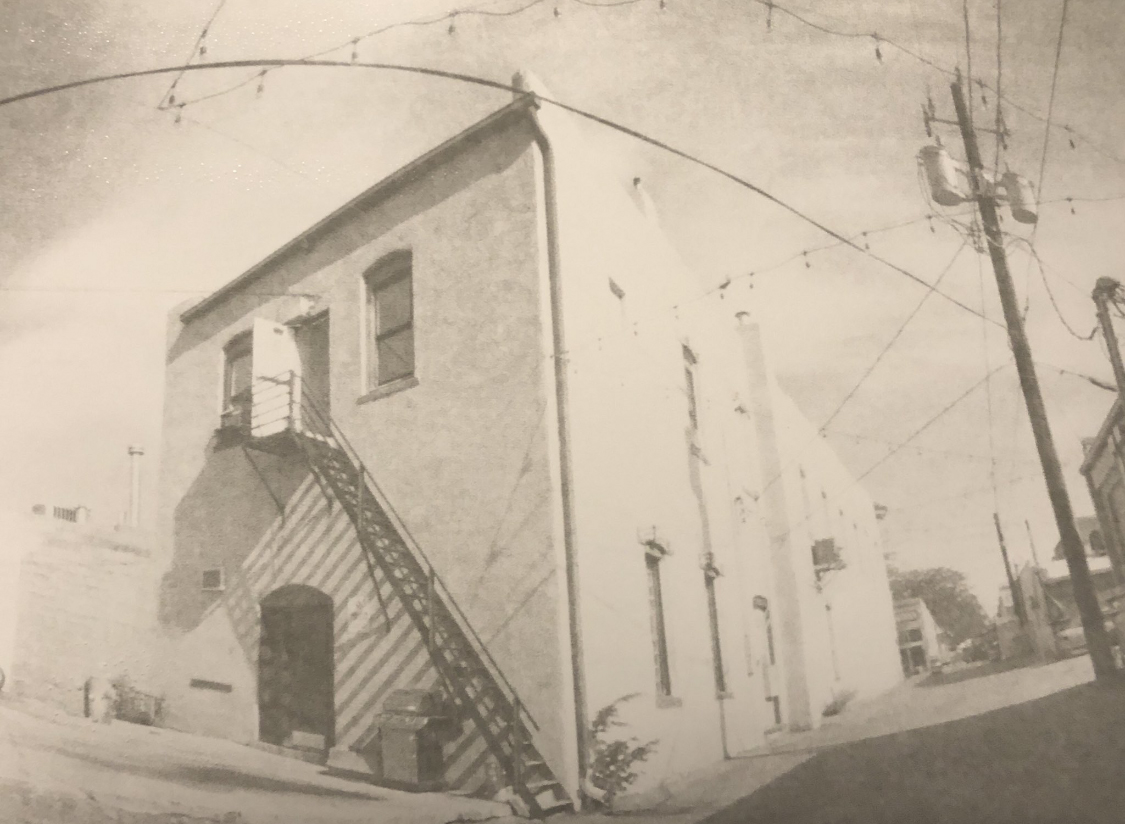
Build your own camera using simple materials. Capture and develop surprising photographs with this lens-less process. Working in a classic photographic darkroom, create paper negatives, and contact print the positive photograph. Direct positive papers offered, (as shown in the image, by Laura Cofrin, 2020), as well as other experimental options. Contact the studio for more information.
Cyanotype Workshop
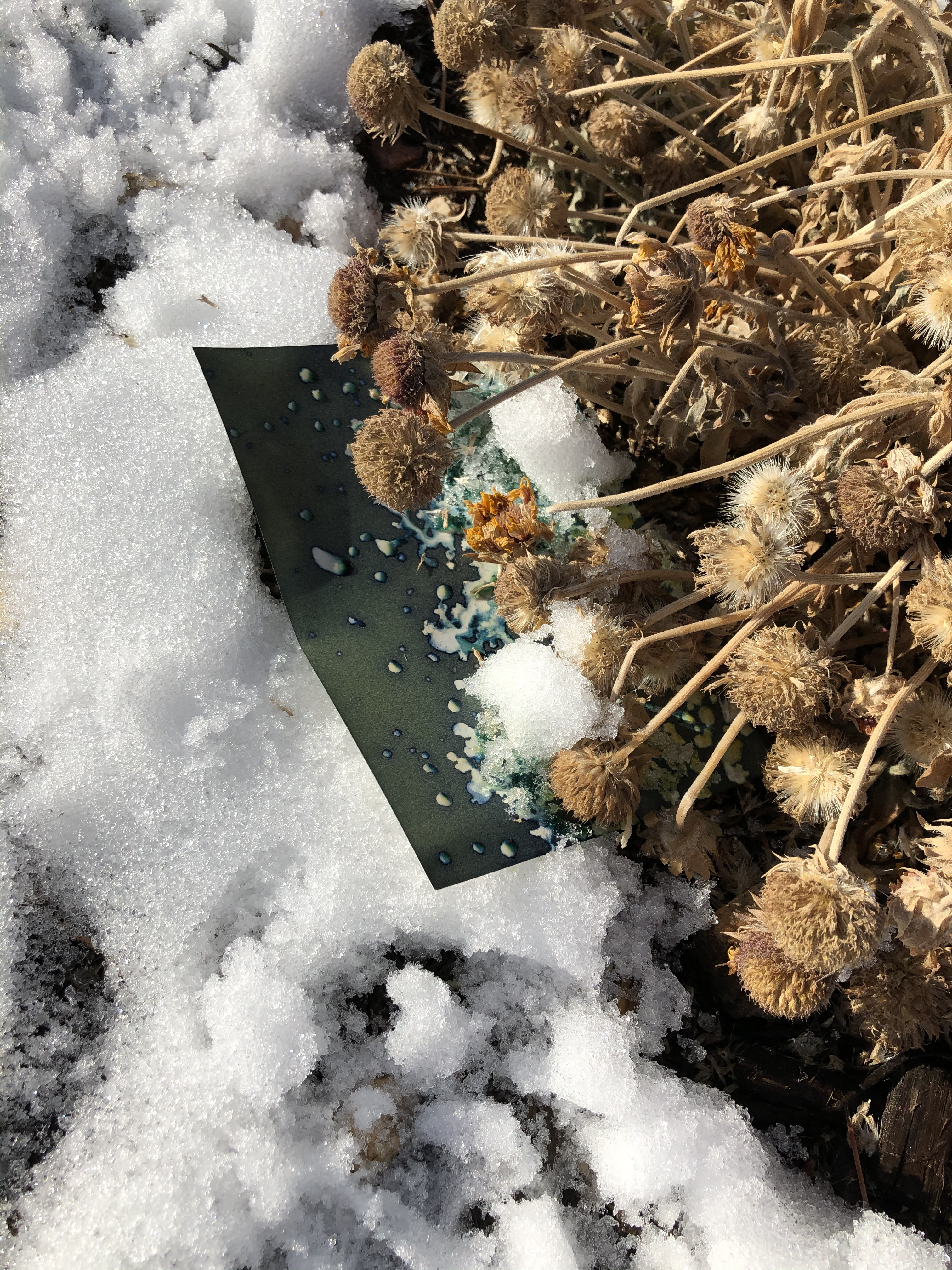
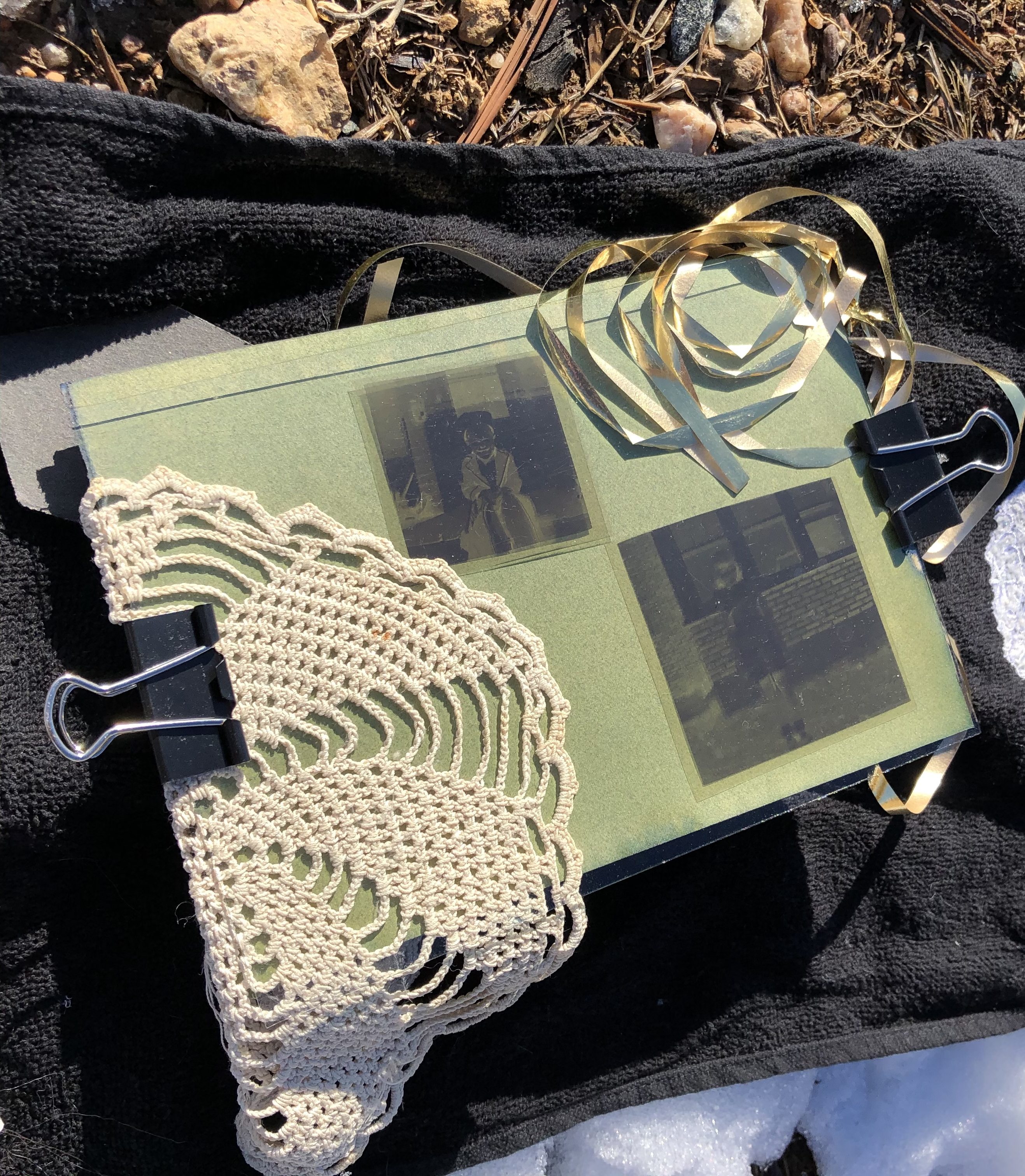
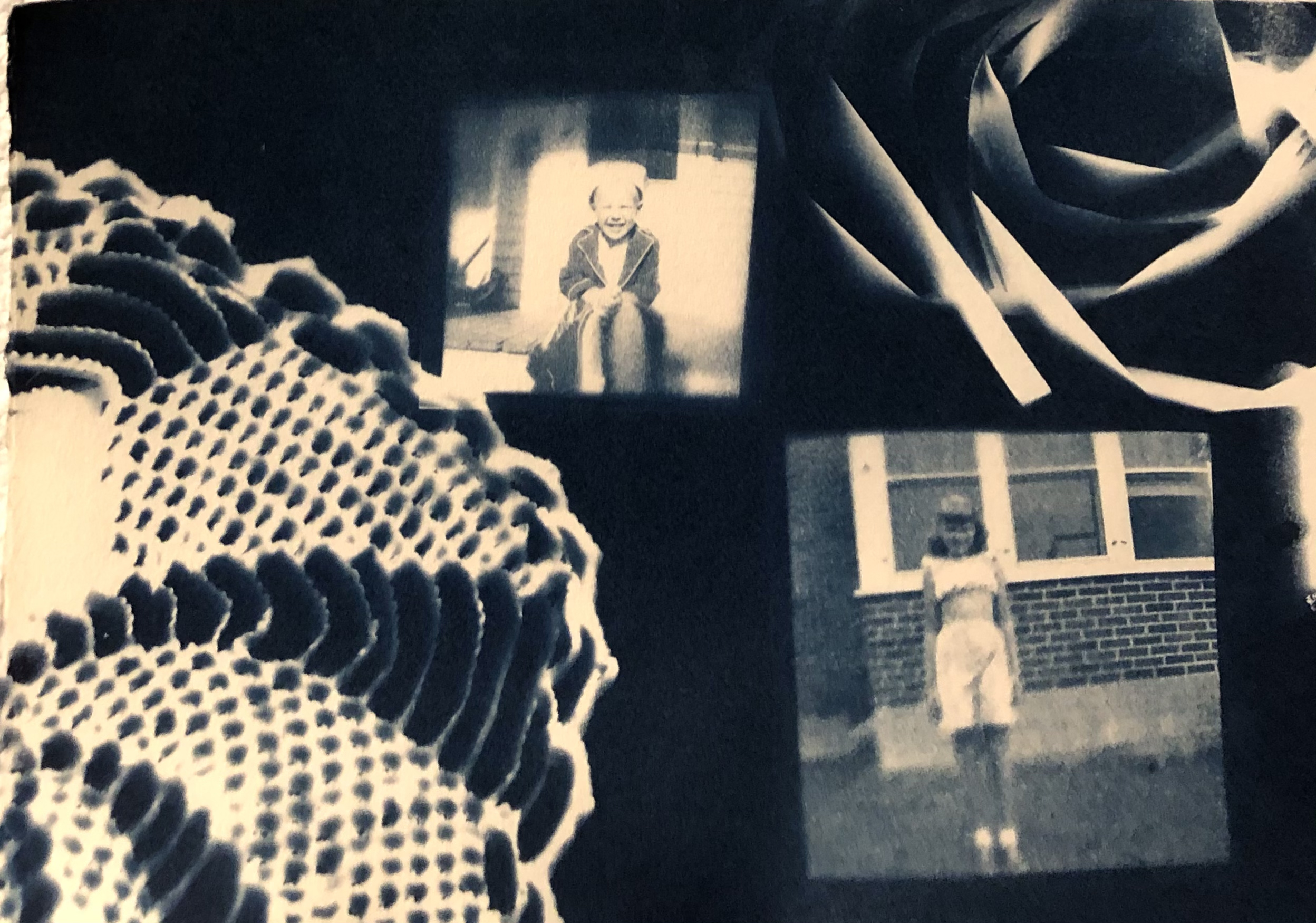
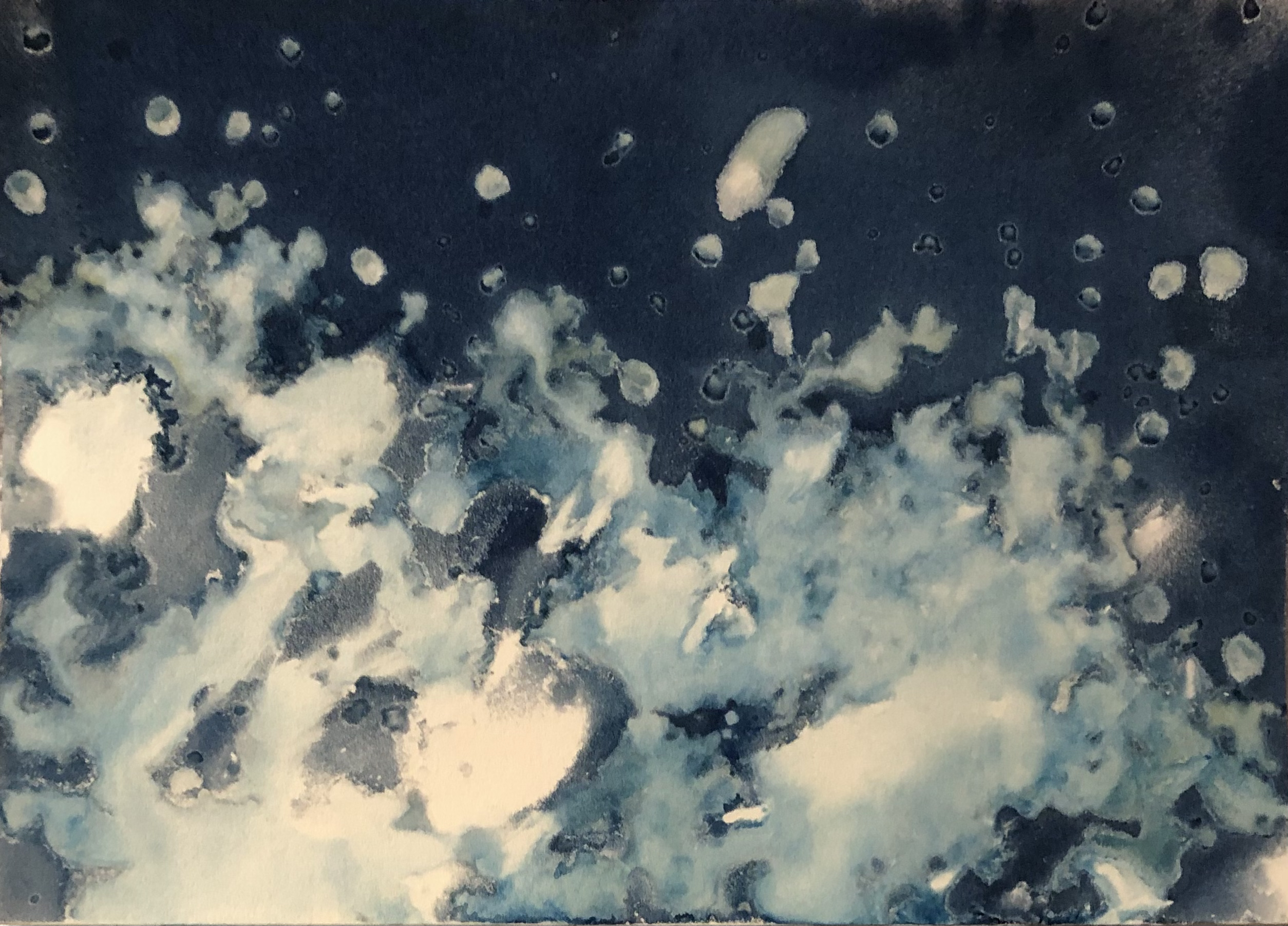
Learn the easy historic process of Cyanotype printing. Non-toxic chemistry, and an easy camera-less work flow makes this a great class for people of all ages. Short workshops offered at $50/hr. Classes taught by Laura Cofrin, in her darkroom at Artworks Center of Contemporary Art, in downtown Loveland, Colorado.
Renewal of this Site
After a long break, this site will be revived to focus on the Photography Workshops offered by Laura Cofrin at Valhall Arts. Classes will be held at Artworks Center for Contemporary Art, in Loveland, Colorado.
Historic dark room printing, pinhole photography, cyanotype and wetplate collodion processes offered. Starting at $200 for a three hour course, you can experience the foundational practice of the the photographic arts, build your own camera, and create one of kind photographs.
Contact Laura Cofrin for more details.
laura@valhallarts.com
Art Collectors’ Conversation
This is a paraphrased summary of an event hosted by the Fort Collins Lincoln Center in conjunction with the Artist Studio Tour and Sale, held June 25-28, 2015
The conversation was moderated by Jeanne Shoaff, Lincoln Center Gallery Coordinator at the City of Fort Collins
The art collectors included:
York – a Biotechnology Software Engineer
Michelle Venus – from KRFC, organizer of the “Support Local Culture” radio program
Tom Campbell and Dawn Putney – married owners of Toolbox Creative
J: Can you explain why you began collecting art? Is there a rhyme or reason to it for you? Do you have a desire to create a lasting legacy? or do you have a specific vision for your collection?
Y: I collect sculpture. It really is just about finding things that I find interesting and keeping them.
DP: We visited the Dali museum in Florida, which was started by the donation of one couple’s collection. I liked the idea of collecting together. We began buying art from local artists that we’ve met, and from our travels. Our first pieces purchased together were two small inexpensive works purchased directly from the artist, right off the street. I think we paid $12 each for them. We like to meet the artists, this creates a deeper connection with the artworks for us. They are reminders of good memories. We are emotionally attached to the pieces.
TC: We buy things because we want to spend time with it. The amount of money invested has not been that large, so I am a bit reluctant to be called an “art collector”. We buy things because we like them, the investment quality or potential increase in value is secondary.
MV: It is easy to buy art. I, too, collect local artists, and friends’ work. Often the decision is a spontaneous one, although I do consider the choice carefully as I will be living with the work for a long time. In fact, I recently sold an artwork at a garage sale that reminded me of an old boyfriend. I just didn’t want to have to look at it any longer.
J: Michelle, you bring up an interesting point. What do you do if your tastes change? or you run out of space?
Y: This “receipt value” versus the aesthetic value is an interesting issue. It doesn’t matter how much a piece costs, it’s whether I like it or not that matters. I consider three things when buying art; 1 – Do I want to see it everyday, 2 – Will it fit in my house, and 3 – Can I afford it? I began saving up and collecting larger pieces as I saw a better value in the “cost per ounce” in the larger pieces. I have worked with artists to set up payment plans, and have paid for things over time to be able to collect the sculptures I liked. I have started putting things outside, too.
TC: We move things around in our house. The most loved pieces are in our favorite rooms. We will hang other works at our office, so we still have space for more.
MV: Most of my early pieces I purchased were not very expensive so there is not an issue with removing it from the collection. I’ll put things in storage, some with great care, others less so.
J: What have you learned from artists? Do you have any advice for them?
Y: The value of a work of art is equal to what someone is willing to pay for it. The price point of our local market is much lower than other areas in the world. If things are not selling it may be worth re-evaluating how you price things.
MV: I respect whatever price an artist is asking for their work. I understand everything that goes into making art works, and how much time is invested to bring the artist to this point where they are now, what they are creating.
TC: I think it is good to offer works at a variety of price points. This allows folks with different financial situations to still begin collecting art. Artists need to have conversations with the collectors, find out what they like and why. Make a connection.
DP: I feel bad that we ask artists to donate works to auctions. I feel guilty when I buy a work of art at a charity auction. The artists deserve to be compensated for their work.
MV: We need to support our local galleries as well as our local artists. The Fort Collins community is very accessible to the arts, more so than Denver I think. The studio tour is the perfect opportunity to buy art, and connect with artists.
Y: Often people see art collections as this “big thing”. It is important to remember it all starts with just one purchase. While it is important to wait to find just the right piece, if you buy one or two pieces a year, over time, your collection will grow.
Technological Effects
As the MoMA Catalyst class wraps up, it has become apparent to me the extent to which technology has infiltrated the art world and become pervasive in our greater cultural landscape. Being a participant on the super information highway of the web is no longer an option in our continually connected community. It is the way of modern life, and practically impossible to communicate without it. I certainly use my smart phone the most of all my technological devices, and am logged on regularly. I do know some folks who are still rebelling against these modern times, there are those who don’t own cell phones, or participate in the daily use of computers. These folks are living in the dark ages, and this resistance is futile, although a personal choice one can freely make.
I use the web to educate myself, explore the world, the arts, discover new artists, and other interests. I use the web to promote my work to audiences I would never be able to reach otherwise. The connectivity has broadened our view of the world, and brought people together in real time. The technological advances of this ‘hyper-communication’ does require people to use critical skills to navigate the space, and filter out that which is not needed, the constant distractions must be avoided to keep one from missing the useful and productive information. The future is now, however, and to shy away from the advances is only a reclusive behavior, the ostrich’s cliche of burying ones head in the sand. It is a denial of our modern times. To be fully engaged, it is a requirement to participate, to whatever extent.
There is a discipline needed in technology use, and an active ‘turning off’ that is required for myself to maintain a true connectedness to those in my immediate surroundings. The ‘flesh and blood’ world of the here and now. When socializing IRL, I give the person in front of me my full attention, and feel shorted in the exchange if I do not receive the same respect. To try to have a conversation with someone constantly checking their phone, or their Facebook or Twitter stream seems a futile endeavor. If they chose to be in the online world vs the face to face real world of our moment together, the interaction is flawed. Being present to the moment is necessary for true communication. To feel valued and understood, I need a person’s full attention. Multitasking has been shown to not be effective, so I would rather give my attentions fully to a real moment, respect the person I’m speaking with, and let the media distractions wait.
For my art making, I prefer the analog approach. A true ‘Old Schooler’, I enjoy playing around with historical techniques, the lost arts, and continuing their histories into the future. This is my mission in my art making. So I value the historical technology found in my vintage Polaroid camera. I am thrilled that the Impossible Project is bringing this old art form back to life, and there is a large counter culture that thrives in all things vintage and historic, including real film photography, vinyl records and Polaroids, just to name a few.
The technological advances have made things easier in many respects, but the historical methods and ideologies are still valid as well. We live in a modern time when all forms are valid, and ideas can be rapidly distributed through out the world.
STEINA – Orka Combined
I was lucky enough to witness this amazing video installation at the Colorado State University Art museum in the fall of 2011. Unfortunately, at the time, I was unfamiliar with this artist, and didn’t appreciate the significance of the work until now.
Catalyst introduced me to the 70’s era Steina Vasulka, a young vivacious Icelandic, living in NYC, playfully experimenting with the newest technologies of those times. In Sound and Fury (1975) she has placed two cameras in a ‘duel’, the self reflecting machines programmed to record at alternating rhythms, witnessing, creating and recording the duality that exists in everything. The artist has a disorienting dance with herself, Steina moves about between the two lenses, her experimental movements becoming a performance. The work began as a test, Steina states in this video interview, (see ~22:00) she had no intention of exhibiting the work, however, the results of her experiment were so surprisingly delightful that the work had to be seen, the phenomenon of seeing both sides at once, an early meta moment of the ‘selfie’. The media teaching the artist what it could do.
Orka Combined was a new interpretation using some of Steina’s earlier works, recycling and layering the videos, creating a new exhibit. The university gallery had been transformed into a full sensory immersive environment with several videos projected on large round screens, taking up the majority of the space. The viewer is invited to enter and “meditate on the relationship between our bodies and the cosmos”. Steina has combined the complicated high tech machines, cameras and computers, with life’s most basic organic elements, the close up images of earth and water, making “matter matter”, her work, less narrative, more a focus on human experience, and appreciating each second for what it brings. The short videos, the darkened room, the close spaces, the large scale environment, all theses elements encouraged the viewer to experience the work with their full bodies, the rhythmic sounds and switching clips mimicking the patterns of our own circulation and respiration. The work makes “the digital imagery behave in the manner of human memory: able to pack loads of info into the small space of the mind’s-eye,” and lures the visitor into the “sensual mysteries” of our physical world. (Quotes from exhibition essay by Los Angeles Times art critic, David Pagel)
Steina states, “to show what cannot be seen except with the eye of media: water flowing uphill or sideways, upside down rolling seas or a weather beaten drop of a glacier melt. The idea is that perhaps the audience could feel a part of this creative trance, living for a moment in a mental world where they have never been.” The work takes you there.
Here is a link to a video installation work that is similar to what I saw.
Sound as Art | Art as Noise
From the MoMA Catalyst class:
“John Cage talked about all sound being equal, whether “musical” or not, people thought he was a musical prankster. Nowadays, we see sound becoming more and more prominent in the arts, not just as a musical form, but in the visual arts: in museums, galleries and festivals. Do you agree that sound (and noise) can be appreciated as an artistic medium for studio artists? Does it make sense for visual artists to embrace sound as a sculptural form? Or should sound be relegated to the musical world, the sole province of musicians.”
Absolutely, sound is art. There are really no boundaries any longer about what can be art. Sound in particular is quite an enjoyable and touching addition to creative projects, or powerful when on its own. If an artist uses sound as medium, any sound, recorded, created or experienced live, then that sound becomes art. The audience may not be as familiar with artworks that feature auditory stimuli, but their bodies are prepared and ready to integrate the experience into their art voyage. It is just a matter of listening.
Sound project with only words: family reunion July 2014
I was awakened by the sharp slam of the back porch screen door. My cousin, his wife and their 4 children have just arrived to the creaky old summer house on the lake. The kitchen filled with relief from the drone of the drive, exuberant to be out of the car, welcomed by the 5 or 6 other kids of cousins eating their syrup dripping pancake breakfast at the round table, the clatter of their bickering that drifted into my early morning half dozing, halted momentarily, to mutate to a surprised welcome full of hellos, hugs, and questions, everyone talking at once, the small space amplifying the noise, tunneling it straight into my small room. Laughter mixes with commands from my aunt, manning the sizzling griddle, directing the next taker of the hot pancake to come and get it, and ‘Cliff, grab some cups for the coffee’, she bellows in the other direction, the clattering kitchen a pot full of sounds.
Ah, my MoMA class, I think, as the light breeze from the open window at the my head brings in the rustle and twitters of the morning air. The multiple layers of sounds I’m experiencing make me crack a smile. As I roll over and sit up in the tiny vintage twin bed, the springs creaking their concerto, adding another layer to the mix. I reach for the iPhone, tap in the lock code, and fire up the microphone app. I click ‘record’, the light blinks but the seconds don’t progress. Time clicks but doesn’t click. I jab at ‘stop’, ‘new recording’, and rap the ‘record’ … still nothing.
I listen, recording the sounds into my memory.
I slide my fingers along the crisp glass surface, groaning in agony at the loss of the moment, my inability to capture the sounds ringing in my head with all its glorious failure, a bitter layer to the soundscape. Again, I sit quietly and listen. The climactic moment of the arrival, now mellows into a rhythm of getting things done, banging the screen, bringing things in, moving on with the day. The kids are off, scraping clean their plates, clearing them to the sink, running out to play. Someone starts the water to wash. It’s time to get up.
______________________________
Barbara London (former Associate Curator, Department of Media and Performance Art, The Museum of Modern Art) in August of 2013 opened the exhibition Soundings: A Contemporary Score. She speaks about the work by Luke Fowler and Toshiya Tsunoda, “Ridges on the Horizontal Plane”. It is an installation that features a film playing on one side of a cloth and a slide show projected on the opposite side, the cloth moving by blowing fans in the space, triggering a piano wire at the horizon line of the projections to make sounds. Fowler and Tsunoda both talk about how our memories are stored as still images. London states that “we live our lives in time, but we remember in still [images]”. So I ask, how do you form a still image of a sound memory?
0.1.1.0. – the duality of the digital medium and video art : thoughts on Global Groove
Having been looking at Nam June Paik’s “Global Groove” (1973), made at the adolescence of the video art age, there is apparent an overriding rhythm to the medium. 0 then 1, or 1 then 0. It’s here or there.
In Paik’s Global Groove, he is critical of the medium (TV) while utilizing it (video) at the same time. There is a push pull with history and modernity, classical and contemporary times, an old vs new game as old as humanity.
John Cage also references his observation of this duality with his sensation of two distinct sounds he experienced in a silent room, which he was led to understand as two integral manifestation of his body. “The high sound is that of the nervous system in operation and the low sound is the blood in circulation.” (John Cage) He has recognized the duality that exists within all bodies.
There is a very experimental quality to these early works, as the artists are playing around with the medium to see what it can do. Many of the early works are not saying much beyond the medium itself, and sometimes feel gimmicky. In Global Groove, there are the interruptions between the clips, and the Pepsi commercial as an actual intermezzo, one an overt commentary on the television watching habit of channel switching and the other stating the now obvious omnipresence of advertising. I often wonder if these visual candy pieces are no more than a psychedelic drug age phenomenon. [They do still continue however…but that’s another post (I’ve read the syllabus).]
I am especially lost at the end as the cellist justifies what she is doing and then politics enter into the work. As the Catalyst course instructor Randall Packer has stated, Paik is examining the “effects of the medium on our psychic condition”. It seems pretty bleak to me, circa 1973.
I have barely begun to mine the idea that is swirling around in my head, I will follow it along and further explore these ideas of duality in future posts, mentioning artists including Joan Jonas, Bill Viola among others.
Be sure to come back, y’all.
The Collective Narrative and the Web
What is the collective narrative, and how is it utilized over the digital platforms of blogs, facebook, twitter, instagram and the like?
I have a blog. I have several blogs. I am also on Facebook and Twitter, and Instagram, Tumblr, Pinterest among others, although I use those less often. At times it seems completely overwhelming trying to manage all these different sites, (I counted once and had almost 20). I often wonder why I do it. As an artist I use the blogs to share my process and work with the world. A deeper look into my art, with more personal details than offered on the gallery website. It is also a journal of sorts, documenting my progression through my career. But is it a true connection? Am I really reaching my audience? The lack of involvement from the audience is disheartening. The comments are few and far between, and rarely a stimulating interaction with true exchange of ideas. So how does one find this connection online?
Twitter would be the main venue for my digital communications, and in my opinion this site is the most responsive in a real human way. I have had some good, although brief, conversations with others in the art world. The interactions have a “real time” element, and an interaction can happen as an event is ongoing, there is a real dialogue. The connection is a superficial one at best, but with further efforts by the individuals communicating, it is possible to expand it to a greater collective narrative. This motivation must come from the participants and is counter to the normal operating procedure found on the web. The culture is one of brief “drive by’s”, following click after click, as we follow that which draws our attentions.
An example of an attempt to create a collective narrative is an installation and art happening I created in February of 2010. The project, “pinching the light fantastic”, involved video, recordings and projections, surveillance, mirrors and bounced light. The entire experimental work was streamed live via Ustream, with live tweeting, and the work was about the differences between active looking and passive seeing, watching and being seen. The audience was an integral part of the work, but their cognition of the collaboration was only recognized if they read the didactics and understood the project. Many realizing they were being surveiled quickly left the space, and were reluctant to engage.
Another example of a collective narrative that I created in a project was my installation “Public Practice”. The installation happened in the real world, and featured the blank gallery walls littered with bits of writing, and doodles from my journals, drawings, photos and other ephemera from my studio, as well as a looping abstract video collage. The space included a vintage typewriter where visitors were encouraged to add their thoughts to the walls. The conversations started with this historic object were hysterical and eye opening, with the younger Gen-X viewers completely unfamiliar with the machine, one viewer even asking “where was the return button”! The last detail in the space was a digital photo booth I had set up to gather portraits of people in my community for future project, “Public Portrait”. The laughter that came from the booth drifted across the space, mixing with the clack of the typewriter, and conversations, as the audience engaged and participated in the project. The engagement from the audience was by far the most of any project I have done. Being able to talk to the artist and others in the gallery space, to touch the objects, and even contribute to the ongoing project engaged the audience on such a deeper level, that the impact was tremendous. I still receive comments from folks who remember this project.
So can a true collective narrative happen online? Only if those involved make a concerted effort to have a timely engagement. This MoMA Catalyst class is a great example of active participants trying to change this online disconnection, and I encourage you to follow those other blogs I follow to continue the conversation. And please, leave your comments below. I will respond! Thanks, Laura
Notes on Collaboration
Collaboration – the action of working together with others to create something.
In my art practice, I mainly work alone. Quiet periods are needed for me to fully realize my ideas, being free from distractions when following obscure elusive ideas to a place of clear understanding. I enjoy the solitary moments in my dark room, working a print to its ultimate state of being. When considering ideas for installation projects, I am forced to learn new technology or adjust my vision to something that I can achieve with my own resources. As a modernist, I think less is more.I try to keep distractions to a minimum when creating environments, and use as few parts as needed to express my ideas.
There have been times when I have worked with other artists in curating group exhibitions, but true collaboration in the creation of an artwork is something that I have not yet done. I asked a friend, Chris Reider, who makes experimental music to provide some work for my installation, SKY HIGH, but this was more of a partnership, an invitation, and not a true ‘working together’ collaboration. The works were created separately.
That said, photography involves a certain level of collaboration between the photographer and the model or subject. This partnership is imbalanced as the photographer has a certain power over the subject, and as such has an added responsibility. A subject does have some power in this dynamic, and may be a willing or unwilling collaborator, making the photog’s job easier or harder.
I would like to collaborate with a ceramicist. I saw an artist who would take objects, and coat them with the liquid photographic emulsion, build a box around the object and make exposures through pinholes on each side of the box. The final effect was wonderful, the distortion of the pinhole camera, mixed with the variable contours of the object upon which the image landed, created something truly unique. This idea runs right along with my experimental creative practice, using old materials and methods in new ways to produce contemporary art objects.
How do artists find engineers willing to help them with their vision? Is this an opportunity that is out of reach for all except an established and successful artist? Are there residencies that promote the collaboration between these two disciplines, art and engineering? There should be, as the collaboration is beneficial to all.
New Blog for the MoMA Catalyst class
Test, Test, Test.
Do not refresh your screen, this is all there is.


 Cofrin Contemporary